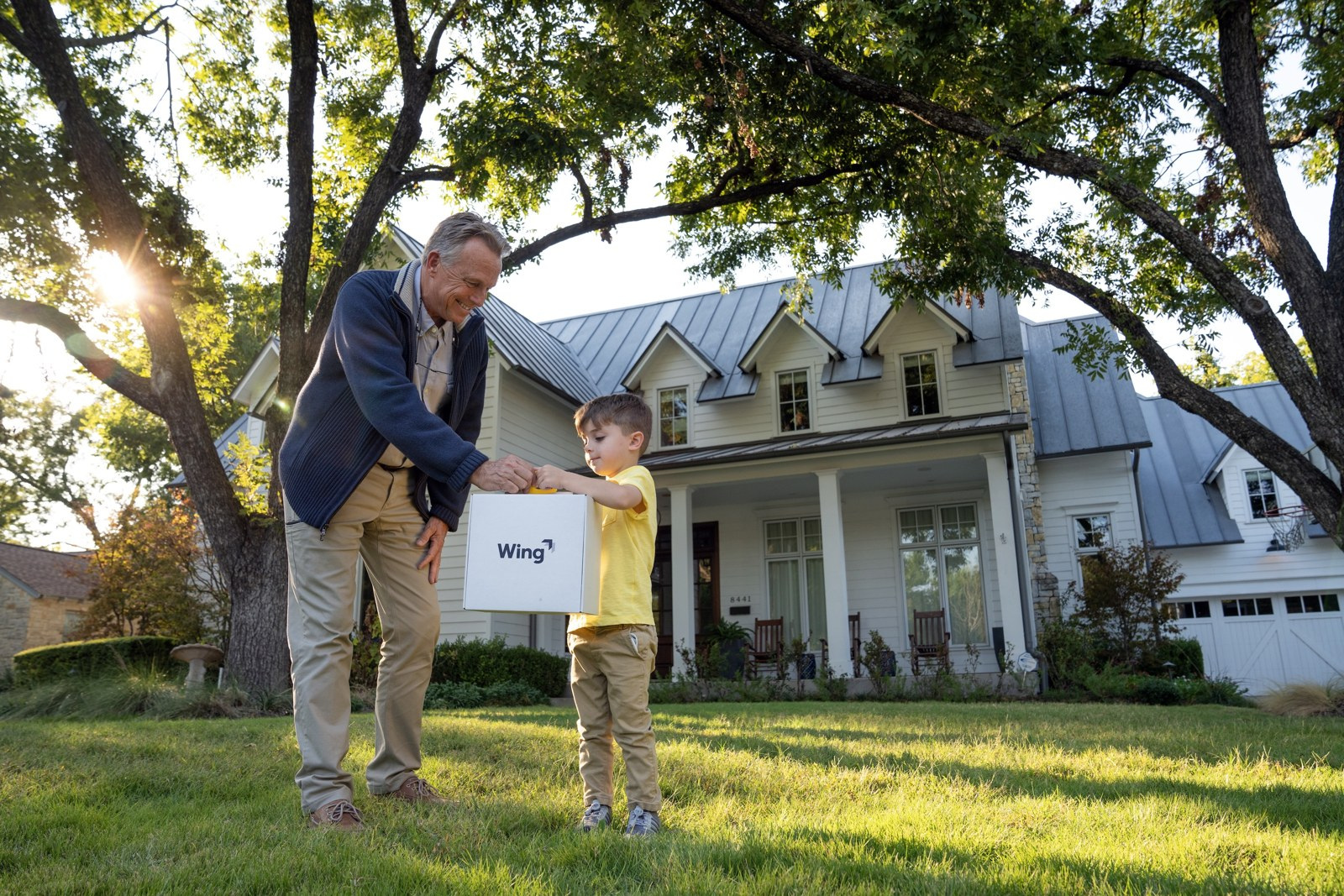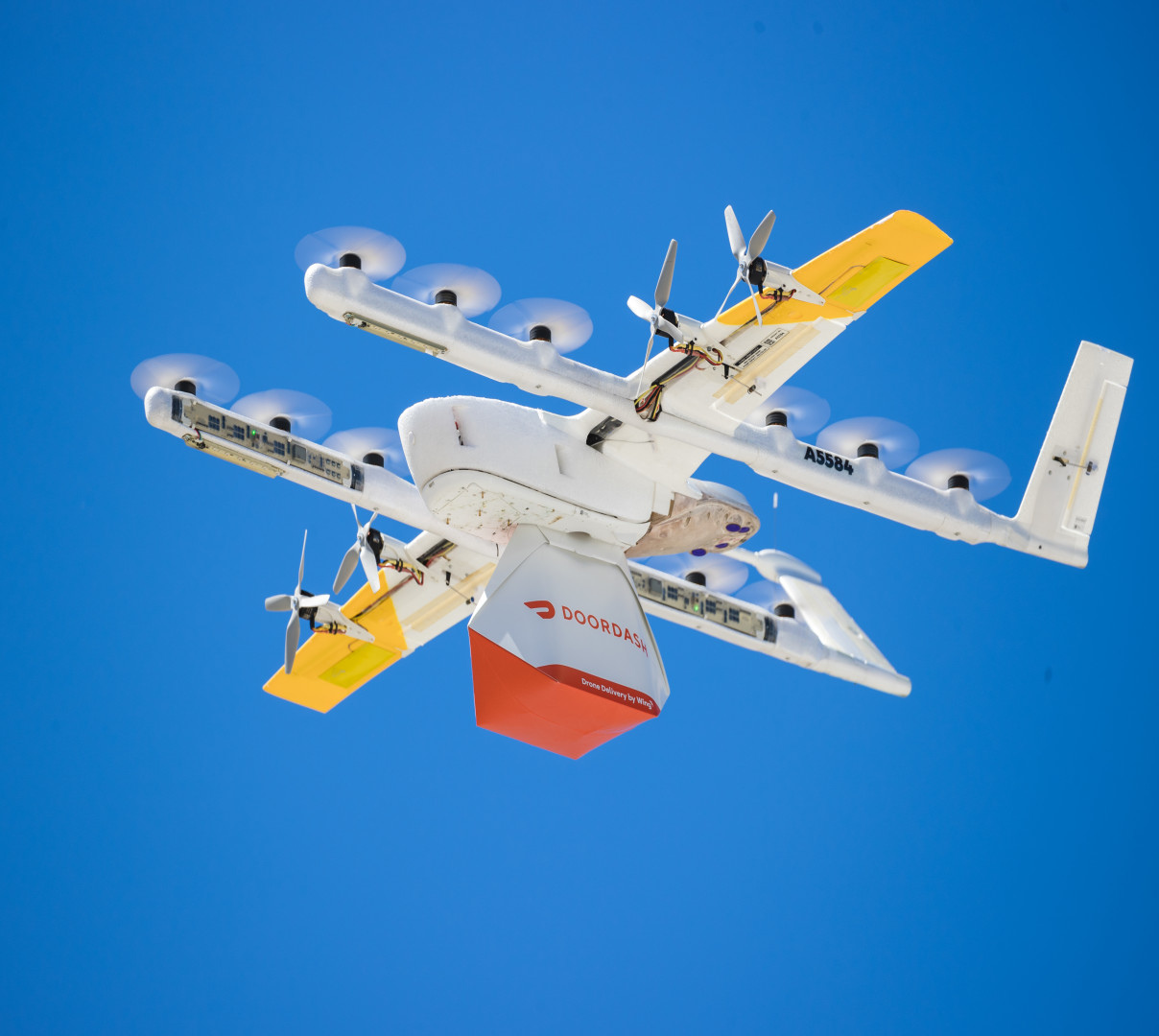
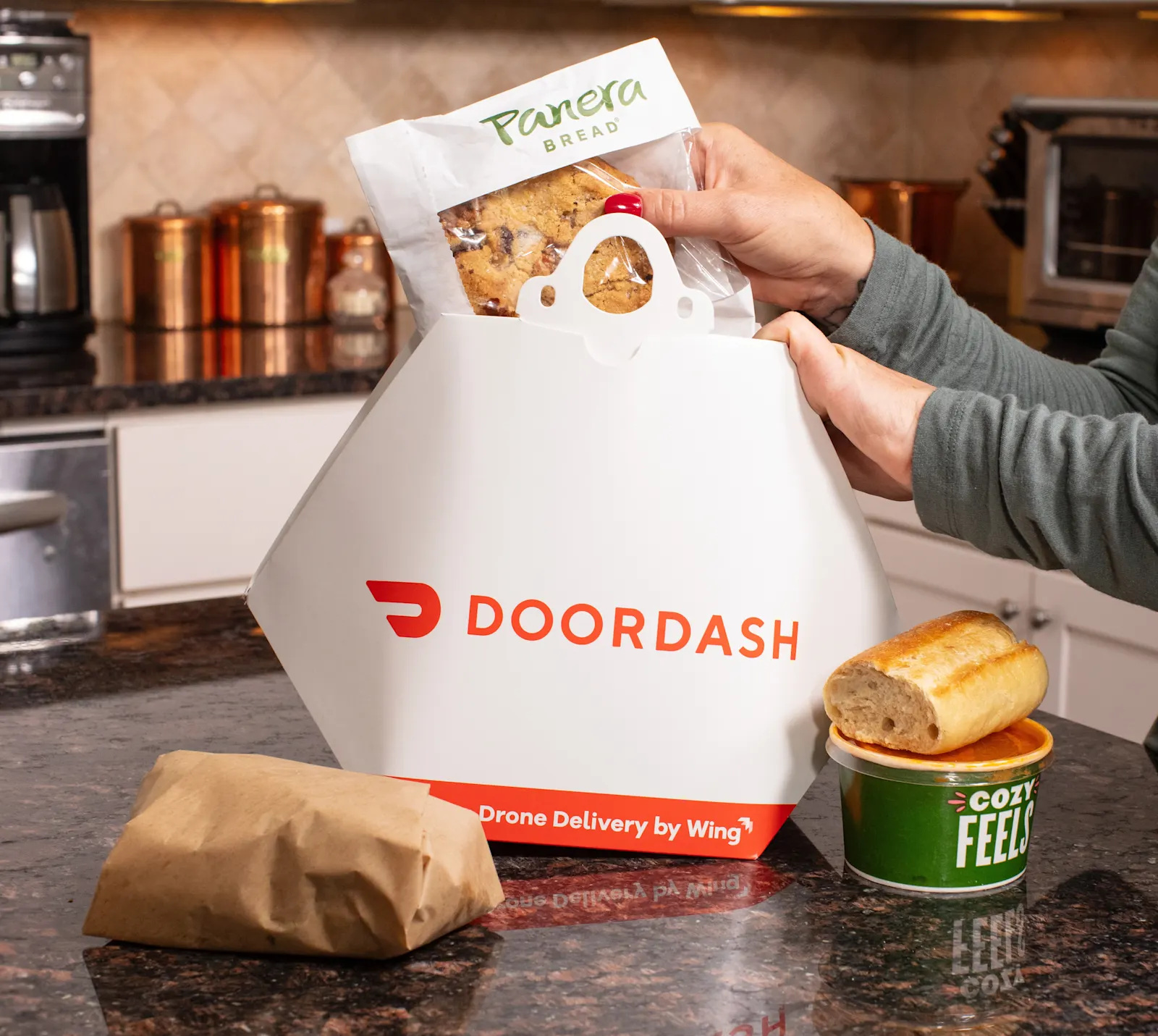
Imagine ordering Panera, hearing a buzz above the house and watching dinner descend into your yard on a tether.
Your kids run to the window. You reach for your phone. The drone climbs, turns and disappears over the rooftops.
Where does it go?
A few miles away, it returns to a Wing nest in a previously unused corner of a neighborhood retail center. Wing leases the space, operates the nest and connects the center’s merchants to thousands of nearby homes. At The Arboretum in Charlotte, one Wing location serves 20 merchants.1
Drones live there. They charge there. They launch from there, all day long.
The customer sees a flying robot.
The tenants gain a new delivery channel.
The shopping center gains an amenity that connects its merchants to thousands of nearby customers.
A property owner sees rent falling out of the sky.
This has happened before. Outdoor storage looked like junk in a yard. Cold storage looked like a strange warehouse. Electric vehicle charging looked like clutter in the parking field. Then each became recognizable infrastructure, and owners who understood the change early found new ways to create value.
Drone delivery has reached it.
Every race for the sky is won on the ground. The space race was decided at launch pads, not in orbit. Jeff Bezos put delivery drones on 60 Minutes in 2013 and the world looked up.3 The winners are also looking down.
This is a network
If you live near Dallas, Charlotte, Houston or Orlando, none of this is imaginary. It is already happening over local streets.
Wing reports completing well over one million commercial deliveries. Wing and Walmart plan to establish more than 270 drone delivery locations reaching over 40 million Americans in 2027.4
Greater Orlando went live in July 2026, initially reaching more than 50,000 homes, businesses and apartment buildings around two Walmart stores.5
Zipline and Uber plan to build toward one million deliveries per day.6
This week Zipline is in talks to raise about $1 billion at a $20 billion valuation.19
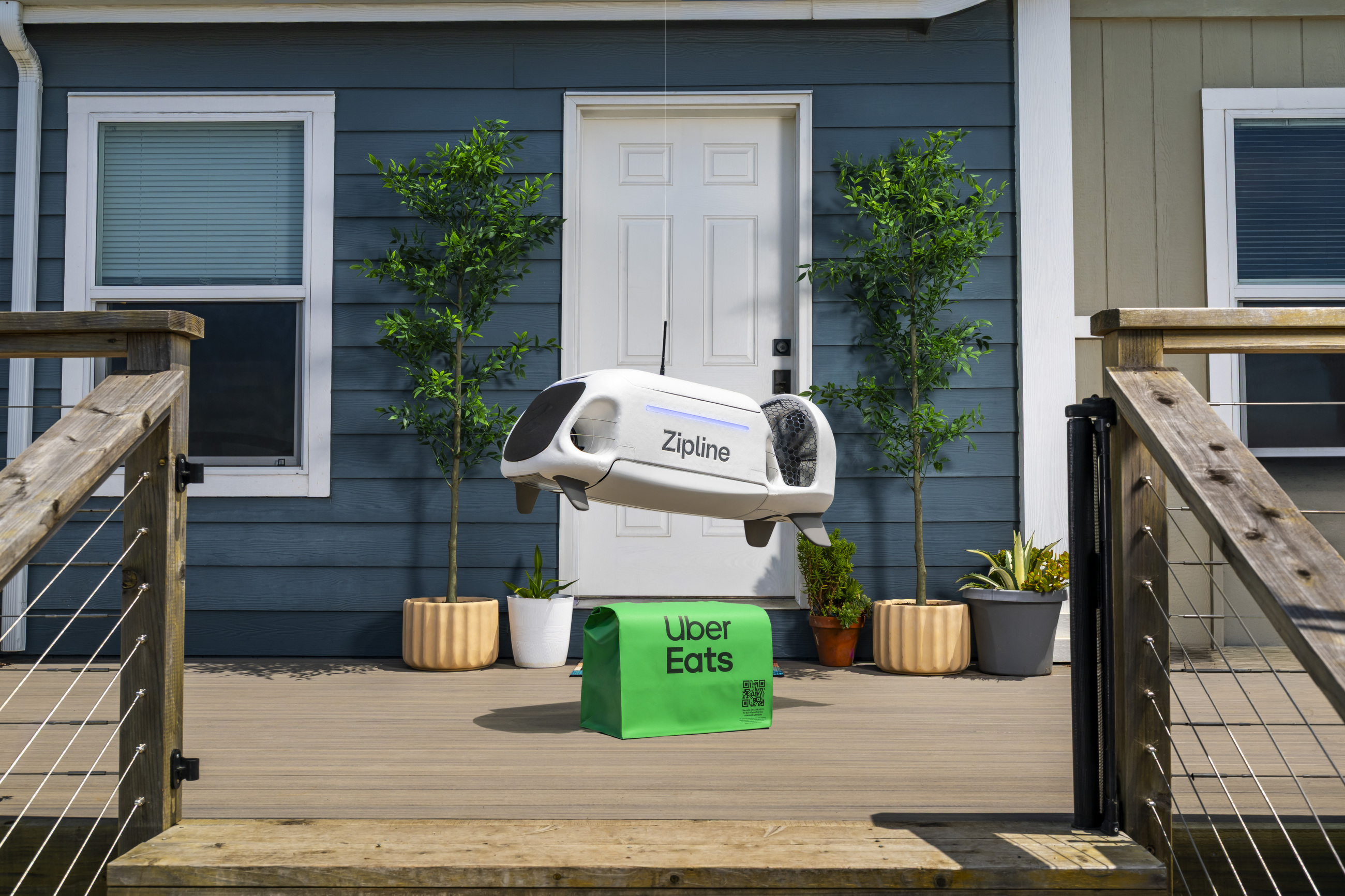
DoorDash earned FAA Part 135 air carrier certification and introduced an aircraft developed by DoorDash Labs.7
Amazon says Prime Air plans to serve nearly 500 United States cities and towns by the end of 2026.8
The FAA has already cleared six Prime Air launch sites in Florida. Miami is one of them.20
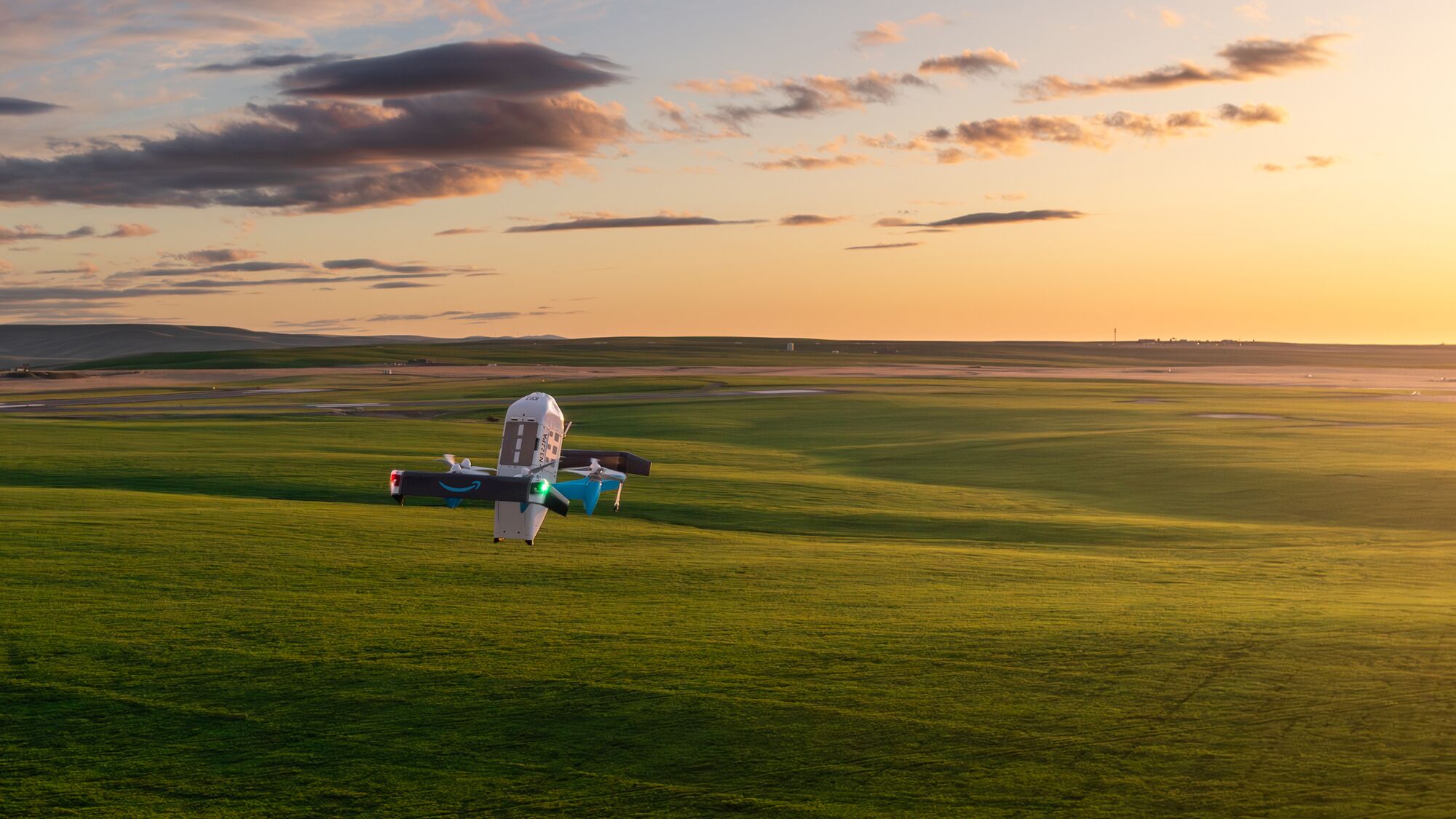
Those are company plans, not guaranteed outcomes. But they point toward the same physical requirement: operating locations close to customers.
One FAA environmental review covers as many as 75 Wing nest locations across the Houston metropolitan area. Comparable reviews cover up to 43 locations around Atlanta and 150 across Central Florida.9
That sounds like aviation news.
It is also a multimarket physical network taking shape one property at a time.
Some sites sit on property a retailer or operator already controls. Others get unlocked by landlords, developers, utilities and local governments working together. A lease is one mechanism inside a much larger deployment system.
Drone delivery, thirteen years to scale
The smallest logistics property ever invented
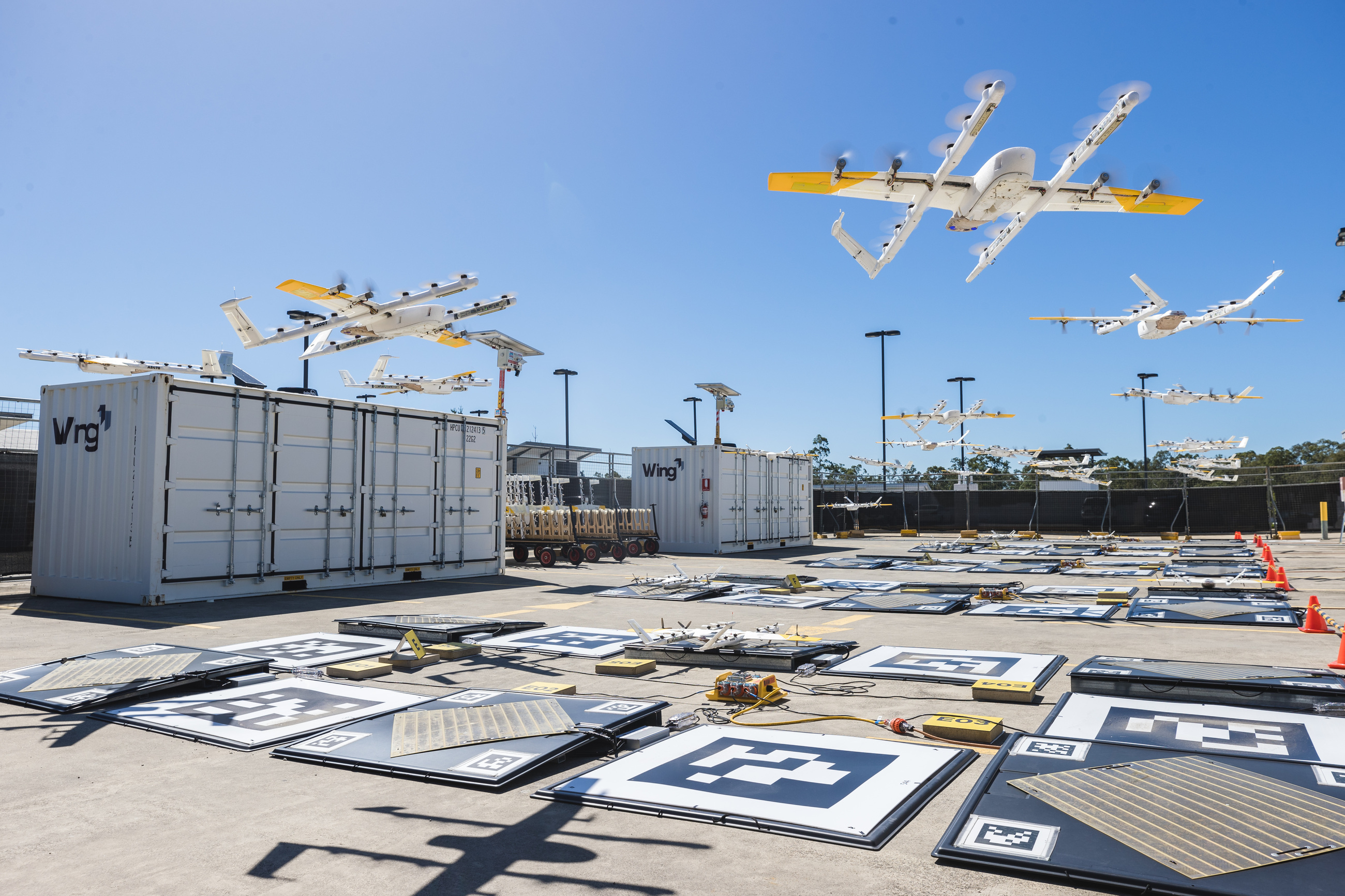
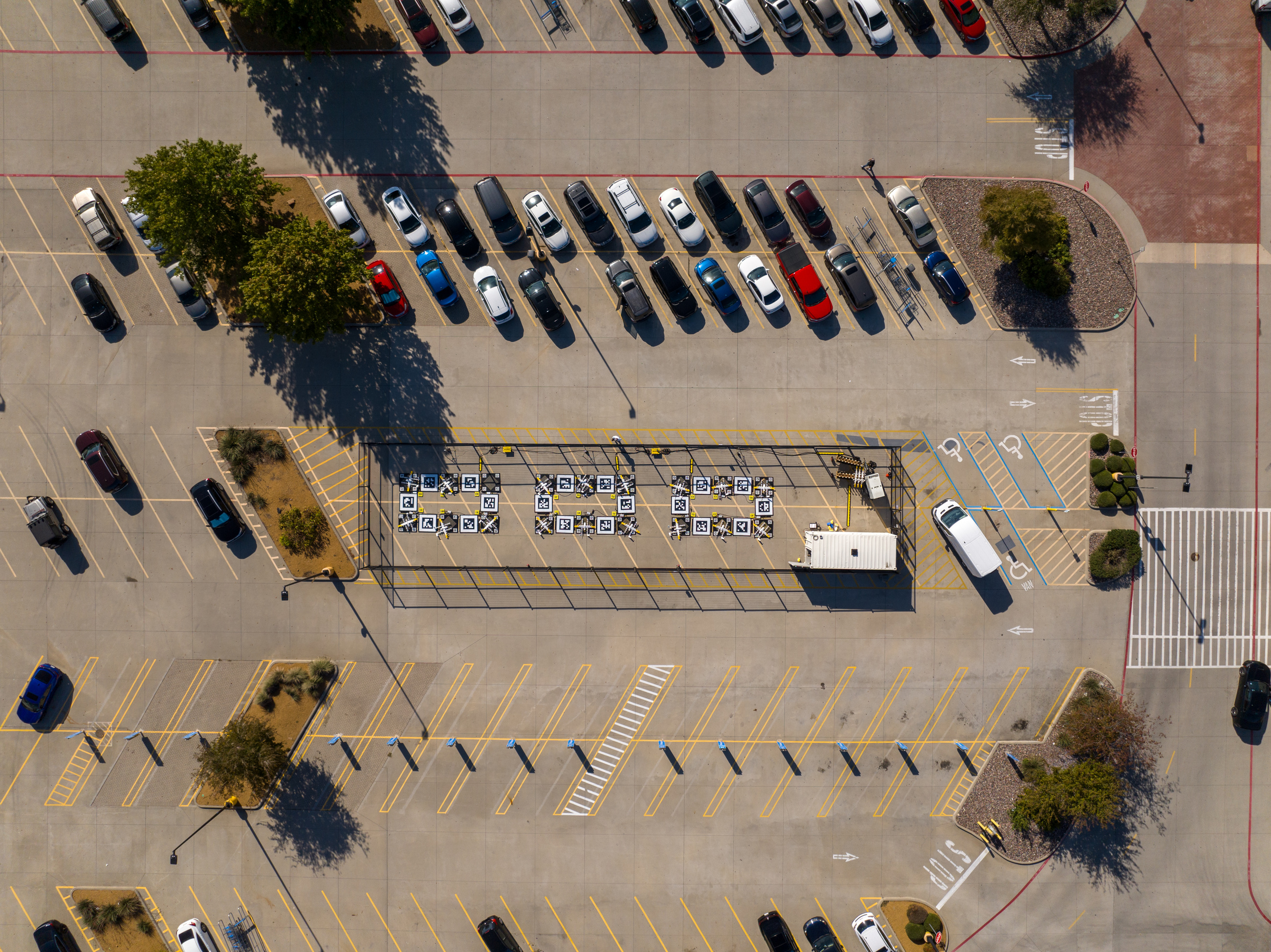
You could walk past one and never notice. A fenced rectangle about the size of a few parking spaces. Flat pads on the asphalt. A container. No sign, no dock, no building.
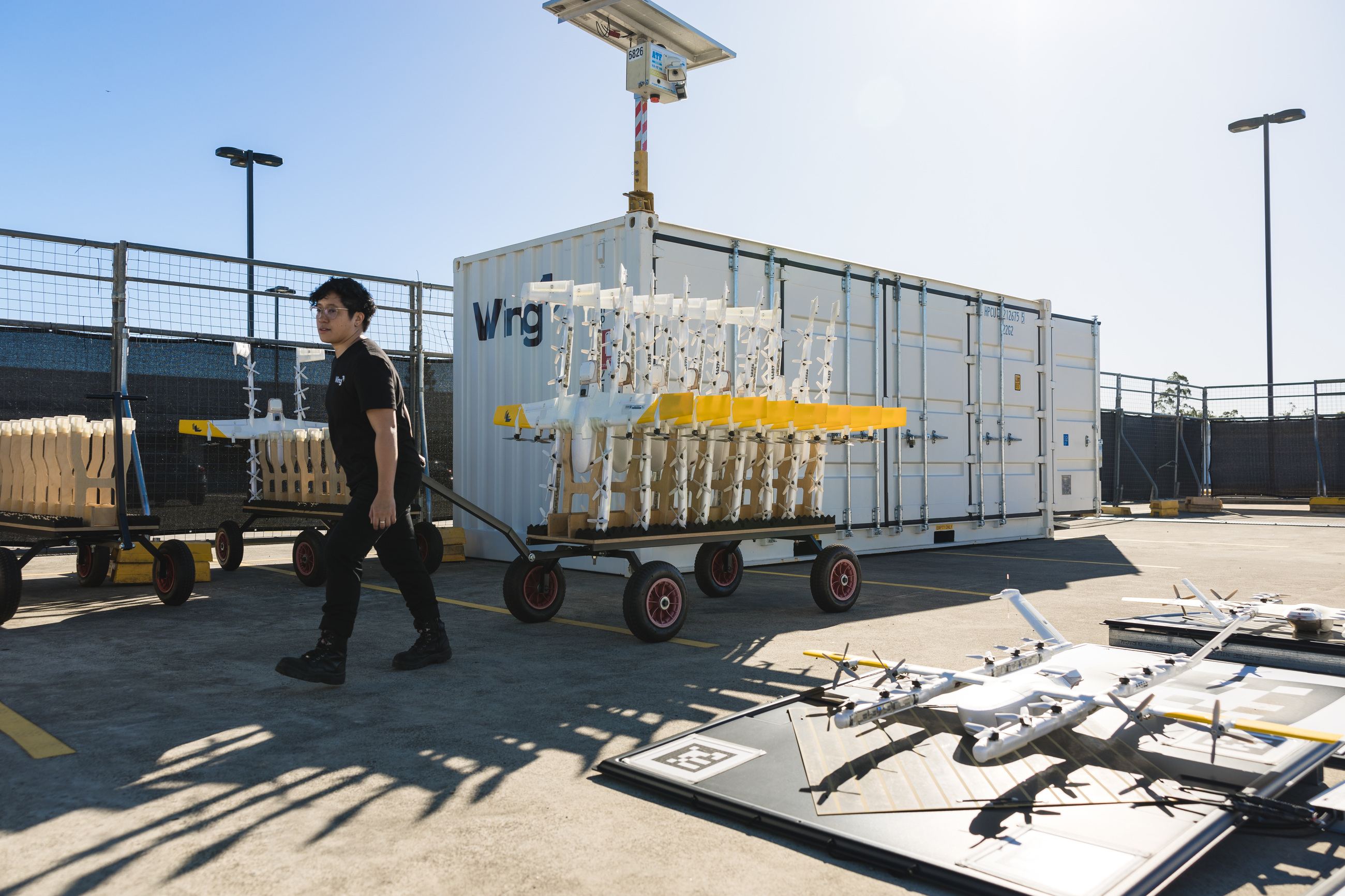
Wing calls its operating locations nests, a useful description for compact sites where aircraft launch, land, charge and sometimes receive packages. Other operators use different systems, including centralized charging hubs, store integrated launch sites and distributed pickup points.
A public Wing planning exhibit included in a 2024 Wylie, Texas, city council packet describes a representative 18 charge pad configuration:11
- Fenced nest footprint: approximately 3,800 square feet
- Charging pads: 18
- Equipment container: one 20 foot storage container
- Secure perimeter: required, with height, material and design determined by the site and approval process
- Power: approximately 14 kilowatts minimum in the planning model
- Generator: a temporary generator may be used at some locations while permanent electrical service is developed
- Modeled throughput: 27 deliveries per hour
- Construction: site specific installation involving equipment, fencing, power and any required surface work
That is one documented planning configuration, not a universal specification. Real sites can be smaller, larger or arranged differently, and power, drainage, fire access and surface work all depend on the property.
Still, consider what is missing. No runway. No conventional loading docks. No acres of employee parking. The operating equipment can fit in an overlooked portion of an ordinary commercial property.
It does not always require ground space at all. Wing operated from the roof of an Australian shopping center, connecting aircraft directly to merchants below.12 Not every roof works. Structure, access, fire requirements and flight paths still have to be evaluated.
The most futuristic piece of the delivery economy can fit in the dead corner of an ordinary parking field. Or on the roof.
How property enters the network
There is more than one way in. Which one fits depends on what you already own.
Store nests
A Wing nest can sit beside a large retailer. The store supplies the orders, employees prepare the packages and the location becomes a delivery point for surrounding neighborhoods. Wing and Walmart are using this model as they expand across the United States.
Neighborhood nests
A Wing nest at a shopping center can serve several restaurants and stores from one operating location. The Arboretum in Charlotte launched Wing and DoorDash delivery in May 2025. The location now connects 20 merchants to thousands of nearby residents.1
The eligible customer area at launch was described as approximately four miles.13 Wing’s FAA environmental reviews describe an approximate six mile delivery range for a nest.9 Both figures can be accurate. Four miles describes an initial customer service area. Six miles describes a broader planning range. Actual service can be limited by merchant coverage, geography, airspace and operating approvals.
Merchant pickup points
Wing also offers an AutoLoader. It can sit near curbside pickup, where an employee attaches an order for an aircraft to collect. Zipline Platform 2 uses a different merchant interface called a Dropbox. Zipline says merchants can load orders into Dropboxes without constructing a full charging location at the store.14
Curbside pickup for the sky.
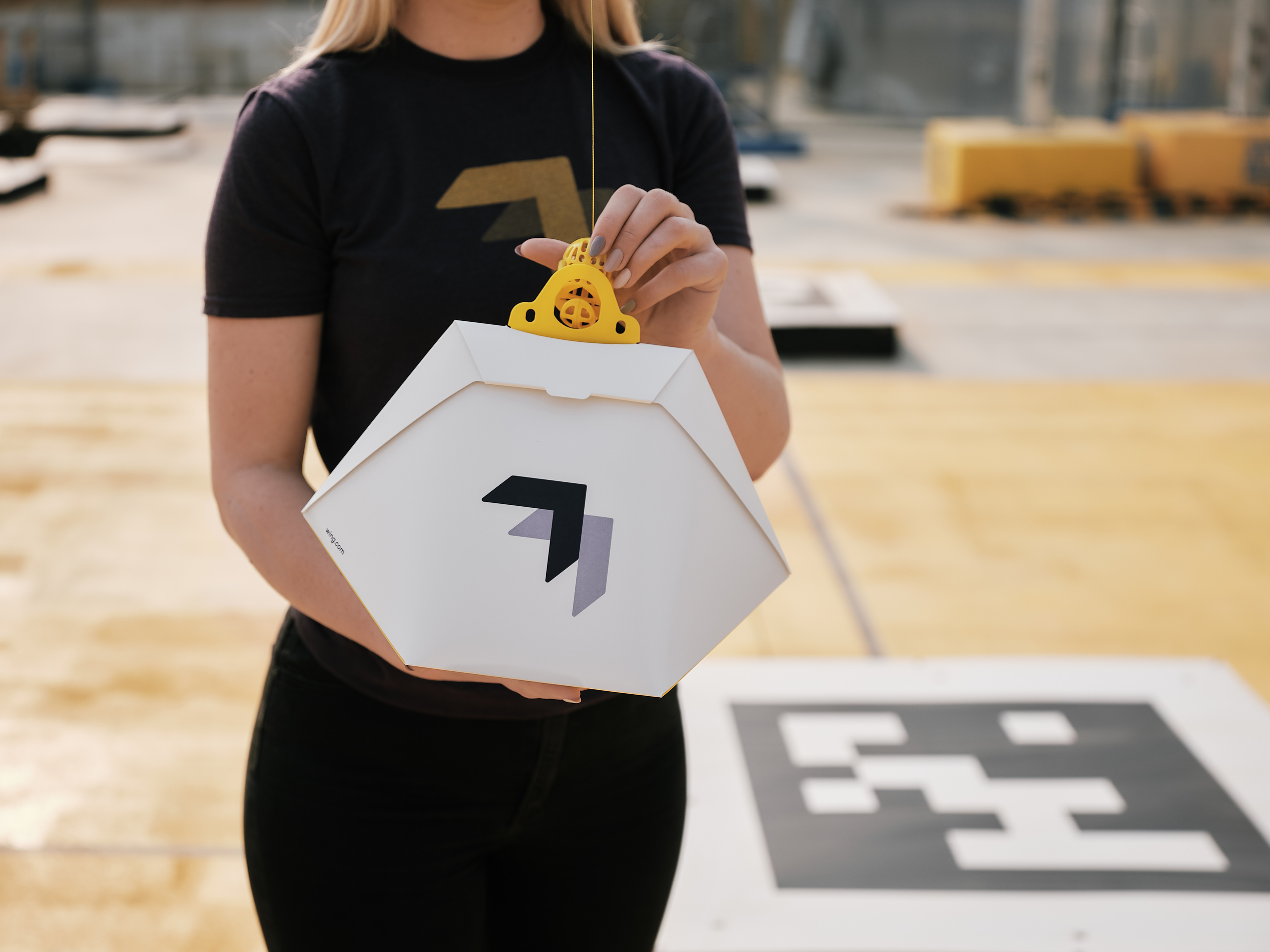
Separate charging hubs
Zipline demonstrates another real estate model. Its Platform 2 aircraft can collect packages from distributed merchant Dropboxes, deliver them to customers and charge at centralized docks.
Zipline separates the two functions. A Dropbox at the store is where an order enters the network. Charging towers sit somewhere else entirely, on a permanent site developed for that purpose and not used for loading.14
That creates the most important distinction in drone real estate: the merchant pickup point and the aircraft charging hub can be two different properties.
A property is not simply “good for drones.” It may be suited to one particular layer of one operator’s network.
What is in it for the owner?
Income from asphalt that earns little today is the obvious part. The larger opportunity is what a nest does for the rest of the property. It gives participating tenants a new way to reach surrounding customers. Restaurants can send food without putting another car on the road. Pharmacies can move small orders quickly. Retailers can offer a delivery experience that did not exist at the center before.
Wing is marketing that proposition directly to property owners. At The Arboretum, it leases a previously unused portion of the shopping center parking lot while serving tenants and nearby residents.2
The opportunity is larger than one landlord signing one lease. Each party controls a different part of the launch engine, and the network scales when those parts work together repeatedly across markets.
The capital is already here
This is not being funded by drone companies alone. Look at who is already standing around the network.
More than $14 trillion of public market value around the ecosystem
That total is not the size of the drone delivery market. It is a map of the capital, technology and distribution already positioned around the network.17
The missing layer is a repeatable system for turning market plans into operating sites.
The aircraft is not the launch engine
Everyone watches the drone. Almost nobody watches the year of work that put it over the house: the market chosen, the property found, the airspace screened, the code read, the power solved, the permits carried, the merchants connected.
Launching one location is a project. Launching dozens across several markets is an operating system, and the real estate is not separate from it.
Saying yes
The scariest word in real estate is rezoning. The good news is that drone infrastructure does not automatically require a complete rezoning. The harder truth is that there is no universal approval path.
Some jurisdictions may treat a nest as an accessory use. Others may require a special use permit or another site specific approval. Wylie required a change from Commercial Corridor zoning to Commercial Corridor with a Special Use Permit because drone delivery was not defined in its zoning ordinance.11
FAA approval does not replace local approval. The FAA authorizes aviation operations and airspace. Local governments continue to control zoning, site plans, building requirements and many aspects of ground development. The FAA states that operators select their own locations and must comply with local land use and zoning requirements.18
So what decides whether a site works? Almost nothing you can see from the street.
The GridSites three screen test
Two properties can look identical from the street. Same size lot, same tenants, same traffic. One of them works and the other does not.
A drone site must pass three different screens. A property can pass two and still fail the third.
Ground
Can the property physically and legally support the proposed infrastructure?
- Parcel control
- Local land use
- Permitting pathway
- Electrical capacity
- Pavement, roof or ground conditions
- Equipment and maintenance access
- Drainage and fire access
- Installation requirements
Airspace
Can the operator safely and compliantly reach the surrounding market?
- Controlled airspace
- Airports and heliports
- Trees, poles, towers and structures
- Potential flight paths
- Noise sensitive properties
- Aircraft range
- Operator approvals and commitments
Demand
Does the property fill a useful position in the network?
- Nearby households
- Participating merchants
- Order density
- Retail and restaurant mix
- Existing operator coverage
- Delivery time savings
- Gaps between operating locations
The best property is not necessarily the center of the largest population circle. It may be the site that closes a missing connection between merchants, aircraft and customers.
The network is larger than any one property
One nest on your property is a curiosity. Your center plus eleven others across the metro is a market.
The FAA’s Dallas Fort Worth review for Zipline covers up to 75 sites, with no more than 20 docks at an individual site. Those locations can serve different purposes, including loading, charging and maintenance.9
On September 11, Zipline asked the FAA for 220 more Texas sites, at up to 1,000 deliveries a day from each.21
One property is a site. A connected group of properties is infrastructure.
That is the whole game.
Because here is the truth beneath all of it. Drone delivery looks like a story about flying robots. Its success depends on ordinary pieces of land with power, permission and the right position in the network.
A child can understand it. A landlord can underwrite it. An operator can scale it.